What if better health isn't about doing more, but about getting back to the things our bodies have always needed?
We're living in an interesting time when it comes to health and wellness. We have more information, more technology, more supplements, more fitness programs, more diets, more wearable devices, and more ways to track our health than ever before.
And yet, I sometimes wonder if we've made getting healthy unnecessarily complicated.
We're constantly looking for the next thing. The next superfood. The next workout. The next supplement that promises to improve our energy, metabolism, sleep, or longevity.
But the answer isn't adding something new? It’s getting back to the basics. Back to the things our bodies have needed all along. Fundamentals!
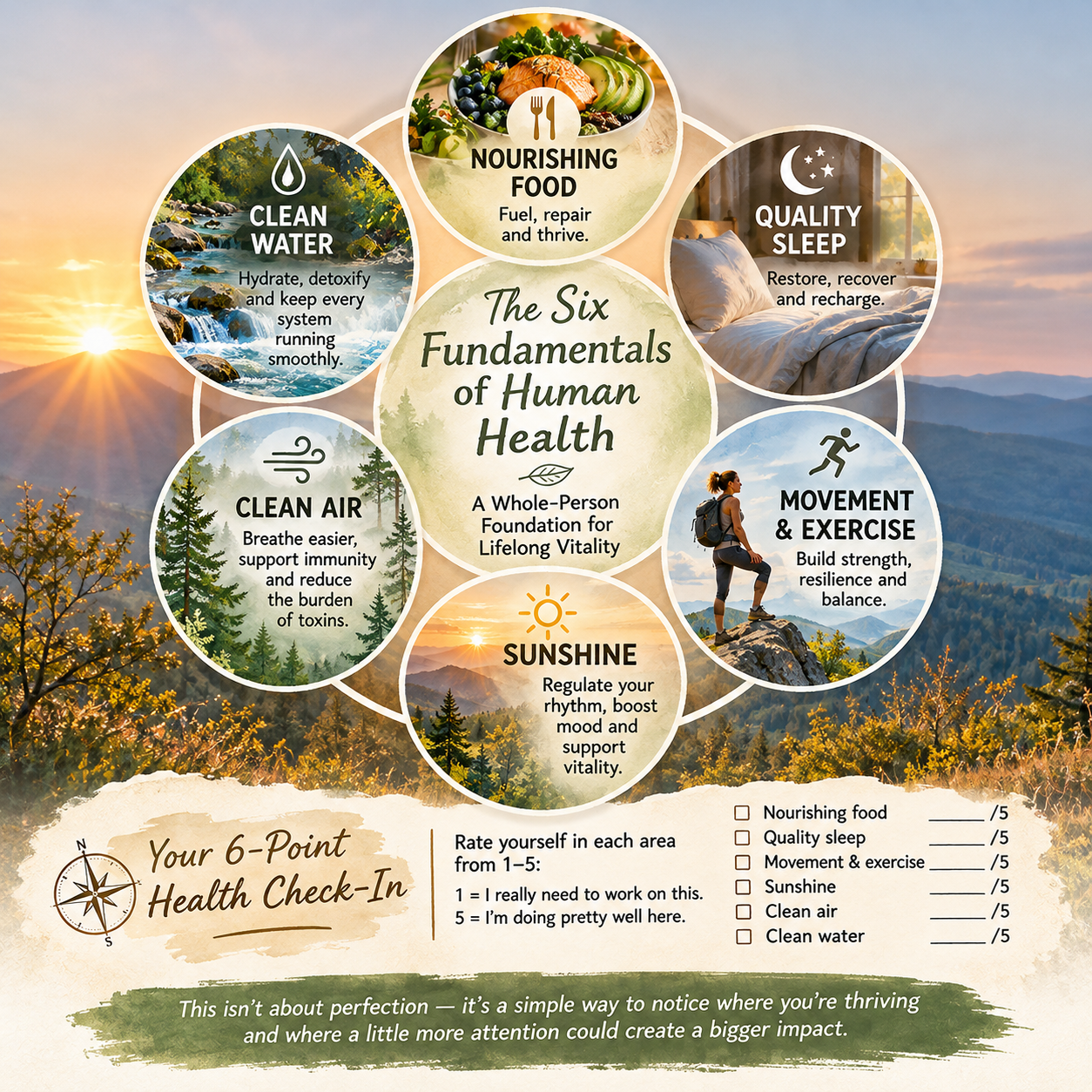
I was listening to an episode of The Human Upgrade:with Dave Asprey and his guest, Dr. Peter Osborne (clinical nutrition expert, founder of the Gluten Free Society, and author of No Grain, No Pain), was sharing what he feels are six fundamentals of human health really caught my attention.
The six were simple:
The right diet
Sleep
Exercise
Sunshine
Clean air
Clean water
Simple, right?
But here's what really got me thinking.
The conversation was about how we often approach health one piece at a time. We tell someone to eat better, but we don't necessarily address their sleep, movement, environment, or hydration.
It's a little like taking a six-question test and only answering one question. You might get that one question absolutely right, but you're still missing five-sixths of the picture.
And I think that's where we sometimes get lost in our pursuit of better health.
We become so focused on optimizing one area that we overlook the bigger picture.
Our bodies don't work in isolation. They're interconnected systems, and the fundamentals work together.
Let's take a closer look.
1. The Right Diet: Nourish Your Body, Don't Just Feed It
Let's start with food. There is certainly no shortage of opinions about what we should and shouldn't eat. Low carb, high protein, plant-based, intermittent fasting, keto, Mediterranean... the list goes on.

But before getting caught up in the latest dietary trend, I think it's worth asking a simpler question:
Are we actually nourishing our bodies?
Food provides the raw materials our bodies need to function. It's how we supply energy, support our immune system, maintain muscle, repair tissue, build hormones, and support the countless chemical reactions happening inside us every day.
My philosophy is to start with real food as much as possible. Foods that are close to their natural state, minimally processed, and rich in nutrients.
Think:
Quality protein to support muscle maintenance and repair.
Colorful vegetables and fruits for vitamins, minerals, antioxidants, and fiber.
Healthy fats to support hormone production and cellular health.
Fiber-rich foods to support digestion, gut health, and blood sugar regulation.
Adequate carbohydrates to fuel an active body and brain.
It's not about eating perfectly. It's about consistently giving your body what it needs.

2. Quality Sleep: Your Body's Built-In Recovery System
We spend so much time talking about what we should be doing during the day that we sometimes forget how much happens when we're sleeping.
Sleep isn't wasted time. It's active recovery.
During quality sleep, our bodies regulate hormones, support immune function, consolidate memories, repair tissues, and restore the systems that keep us functioning.
Sleep also plays a significant role in appetite regulation, insulin sensitivity, mood, cognitive function, and physical performance.
Think about it: You can eat a beautifully balanced diet and follow a fantastic exercise program, but if you're consistently sleeping five or six hours a night, you're making things harder on yourself.
A few ways to support better sleep:
Maintain a relatively consistent sleep and wake schedule. > the body gets into a rhythm
Get natural light exposure in the morning. > this set your circadian rhythms
Create a calming wind-down routine.
Keep your bedroom cool, dark, and comfortable. > 65 degrees is optimal
Limit stimulating activities and bright screens close to bedtime.
Pay attention to caffeine timing. > for me i can’t have caffeine after 2pm
And perhaps most importantly, stop treating sleep as something you can sacrifice without consequences.
You don't earn extra points for running yourself into the ground.
3. Exercise: Your Body Was Designed to Move
This one is near and dear to my heart.
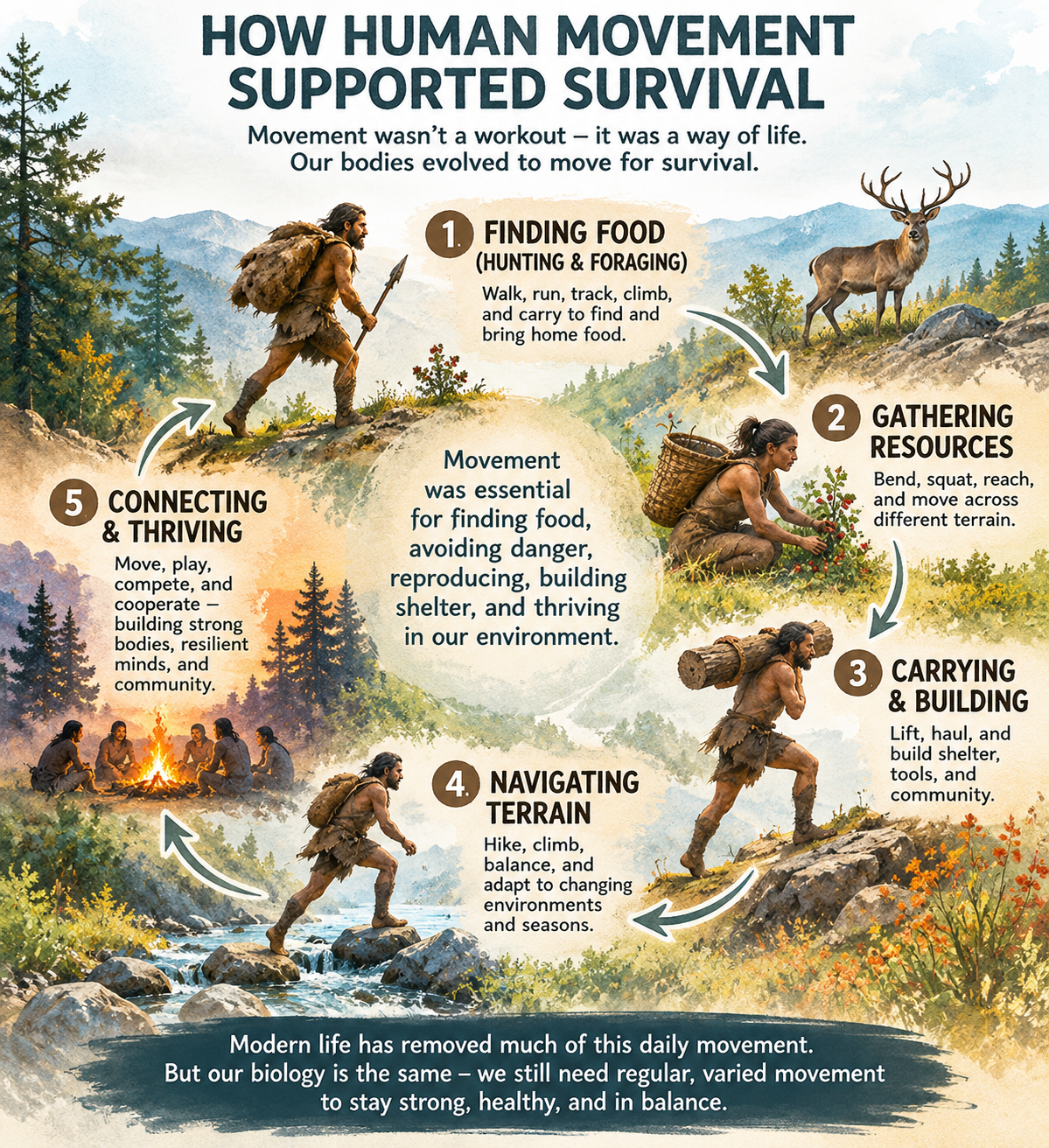
Movement is so much more than burning calories or changing the number on the scale. Our bodies are designed to MOVE. Our muscles, bones, joints, cardiovascular system, brain, and metabolic processes all benefit from regular physical activity.
Think about it: our bodies evolved to move in order to survive. We walked, climbed, carried, lifted, squatted, ran, explored, and adapted to the physical demands of our environment. Movement wasn't something we scheduled into our day; it was simply part of living.
Today, many of us live much more sedentary lives. We have cars, computers, conveniences, and technology that have eliminated so many of the physical demands that once shaped our daily lives. But our biology hasn't caught up with our modern conveniences. Our bodies still need those physical demands. Without them, we lose opportunities to build strength, maintain mobility, support bone health, and challenge our cardiovascular system.
And perhaps that's why we sometimes feel restless, antsy, or disconnected when we've spent too much time sitting. Our bodies are looking for an outlet.
Movement helps keep us in balance:
Physically, by maintaining muscle, bone density, mobility, balance, and cardiovascular health.
Metabolically, by supporting blood sugar regulation, energy production, and insulin sensitivity.
Mentally, by supporting cognitive function, mood, and stress regulation.
Emotionally, by giving us an outlet for tension and helping us reconnect with ourselves.
Movement doesn't have to mean an hour at the gym. Walking, hiking, dancing, gardening, playing with your kids, taking the stairs, stretching, strength training, and practicing yoga all count.
The goal is to reintroduce movement into our lives in ways that challenge, nourish, and support our bodies.
We don't just need exercise. We need movement woven into the fabric of our everyday lives.
4. Sunshine: More Than Just a Nice Day Outside
When was the last time you intentionally stepped outside and let the sunshine hit your face? Not while rushing to your car or checking your phone, but actually spent some time outdoors?
Sunshine is so much more than a source of vitamin D. It's one of the most important environmental signals our bodies receive.
Our bodies evolved in rhythm with the natural cycles of light and darkness. Yet today, many of us spend the majority of our waking hours indoors, under artificial lighting, looking at screens, and behind windows that filter out portions of natural sunlight.
Here's what's interesting: sunlight contains different wavelengths, including UVA, UVB, visible light, and infrared. Each interacts with our biology in different ways.
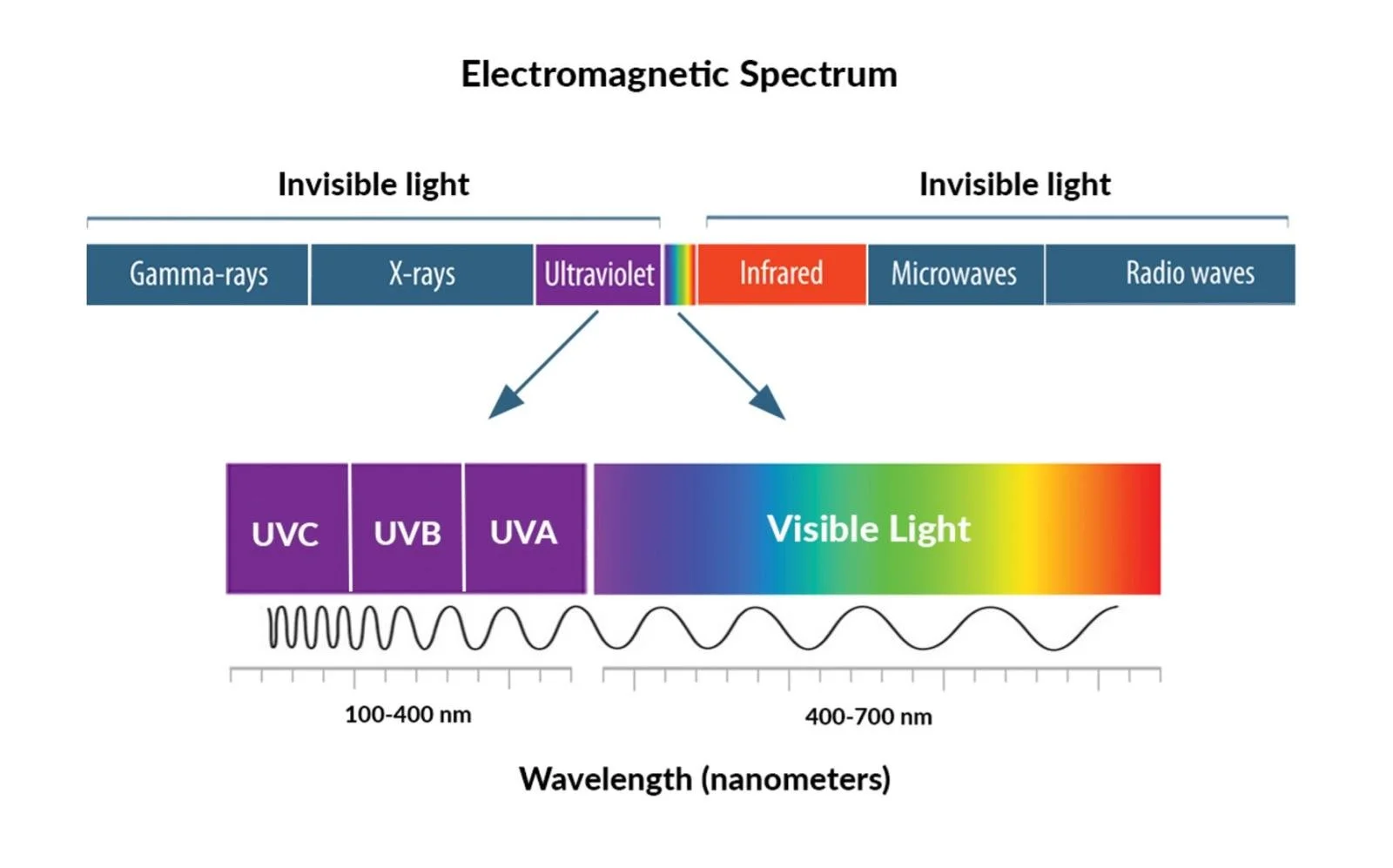
UVA can help release nitric oxide stored in the skin, which helps blood vessels relax and supports circulation.
UVB triggers vitamin D production, essential for calcium absorption, bone health, and muscle function.
Visible light helps regulate our circadian rhythm, influencing our energy, hormones, and sleep-wake cycle.
Red and near-infrared light are being studied for their role in cellular energy production and mitochondrial function.
Morning light is particularly valuable because it helps synchronize our internal biological clock, signaling to our bodies that it's time to wake up and become alert.
And sitting beside a sunny window isn't quite the same as getting outside. Window glass blocks UVB and filters portions of other wavelengths, so we don't receive the same spectrum of natural light.
A few ways to reconnect with natural light:
Get outside in the morning, ideally near sunrise or within the first hour after waking.
Take a walk outdoors rather than getting all your movement inside.
Spend time outside throughout the day, even when it's cloudy.
Enjoy natural light while being mindful of UV exposure, avoiding sunburn, and protecting your skin appropriately.
You don't need a tropical vacation or hours in the sun. Sometimes a morning walk or a few minutes outside is a great place to start.
Our bodies evolved alongside the natural world. Maybe it's time we started acting like it.
5. Clean Air: Pay Attention to What You're Breathing
We breathe approximately 20,000 times a day. Air quality matters because every breath delivers oxygen to our lungs and, ultimately, our tissues.
Air pollution, smoke, dust, mold, and other airborne irritants can affect respiratory and cardiovascular health. And indoor air quality deserves just as much attention as outdoor air. We spend a significant portion of our lives inside our homes, offices, schools, and gyms.
One area I think deserves more attention is mold exposure.
Mold isn't simply an unpleasant smell or an unsightly spot on the wall. When buildings have excess moisture, mold can grow and release spores and other particles into the air. Exposure can trigger allergic reactions, asthma symptoms, respiratory irritation, and other health concerns, particularly in people who are sensitive to it.
There's also growing interest in how chronic exposure to damp or moldy environments may intersect with immune function and inflammation. Some individuals report experiencing a wider range of symptoms, including fatigue, headaches, and sensitivities, although the science linking mold exposure to autoimmune diseases and food sensitivities is still evolving.
The takeaway? Don't underestimate your environment.
Some simple ways to improve the air around you:
Get outside and enjoy fresh air
Ventilate your home when outdoor air quality permits.
Avoid indoor smoking and minimize exposure to smoke.
Address excess moisture and mold.
Consider appropriate air filtration, especially if you have allergies or live in an area affected by wildfire smoke.
Sometimes improving our health isn't about adding something to our routine. It's about reducing the things we're unnecessarily exposed to.
6. Clean Water: Hydration Is Foundational

Water is involved in nearly every process in the human body.
It helps regulate body temperature, transport nutrients, remove waste, lubricate joints, maintain blood volume, support digestion, and facilitate countless cellular processes. Think about it: our bodies are approximately 60% water. Every cell, tissue, and organ depends on it to function properly.
Even mild dehydration can affect concentration, energy, mood, and physical performance. And if you're exercising, sweating, teaching fitness classes, or spending the day outdoors, your hydration needs may increase.
But it's not just about how much water we drink. It's also worth considering the quality and source of our water.
A few simple reminders:
Drink water consistently throughout the day.
Pay attention to thirst and hydration needs during exercise.
Increase fluids when you're sweating more.
Remember that fruits and vegetables contribute to your daily water intake.
Consider the quality and safety of your drinking water and whether filtration may be appropriate for your home.
Water is one of those things we tend to take for granted because it's always there. But its role in our health is anything but insignificant.
I actually wrote an entire article about the importance of hydration, how water works inside our bodies, and what to consider when choosing your drinking water.
Curious about what's really in your glass? Head over to my previous post: Water, Drink It Up.
You might just look at your water bottle a little differently afterward!
It's Not About Perfection. It's About the Whole Picture.
Here's where I want to bring this all together.
Imagine someone who completely transforms their diet. They're eating more vegetables, getting enough protein, cutting back on ultra-processed foods, and making thoughtful choices.
That's wonderful.
But they're also sleeping five hours a night, sitting for most of the day, rarely getting outside, breathing poor-quality indoor air, and barely drinking water.
They're doing one thing really well, but they're leaving so much opportunity on the table.
And this is where I think we need to change the way we approach health.
Instead of asking, "What else should I add?" perhaps we should ask:
"Which fundamentals am I neglecting?"
You don't have to overhaul your entire life tomorrow. In fact, trying to change everything at once can become overwhelming.
Start by taking an honest look at each area.
Are you nourishing your body?
Are you allowing yourself enough time to recover?
Are you moving regularly?
Are you getting outside and experiencing natural light?
Are you paying attention to the air you're breathing?
Are you drinking enough clean water?
Maybe your nutrition is in a good place, but your sleep needs attention. Maybe you're exercising consistently but spending nearly every other waking hour indoors. Maybe you drink plenty of water but rarely move your body outside of structured workouts.
There's no prize for having one category completely mastered while ignoring the others.
The goal isn't perfection. It's balance, consistency, and recognizing that all of these things contribute to the bigger picture.
And perhaps that's the most important reminder: Health isn't built through one dramatic change or one perfect habit. It's built through the small, ordinary things we do consistently.
So before you buy another supplement, sign up for another program, or chase the next wellness trend, take a look at your foundation.
Sometimes the most powerful upgrade isn't something new, it's getting back to the basics.
How's Your Health Foundation?
Let's make this personal. Take a few minutes to check in with yourself.
On a scale of 1–5, how would you rate yourself in each of these six areas?
1 = I really need to work on this.
5 = I'm doing pretty well here.
🥑 Nourishing food ____ / 5
😴 Quality sleep ____ / 5
💪 Exercise ____ / 5
☀️ Sunshine ____ / 5
🌿 Clean air ____ / 5
💧 Clean water ____ / 5
Now take a look at your answers.
Where are you thriving? Where might you be falling short?
And most importantly, which one area could use a little more attention right now?
Don't look at this as another list of things you need to do perfectly. Think of it as an opportunity to identify where a small, intentional change could make a meaningful difference.
You don't need six perfect scores. You need a foundation that supports the life you want to live.
Pick one area. Start there. Build from it.