There Is No Shame in a Regression
Sometimes the strongest thing you can do is make an exercise easier.
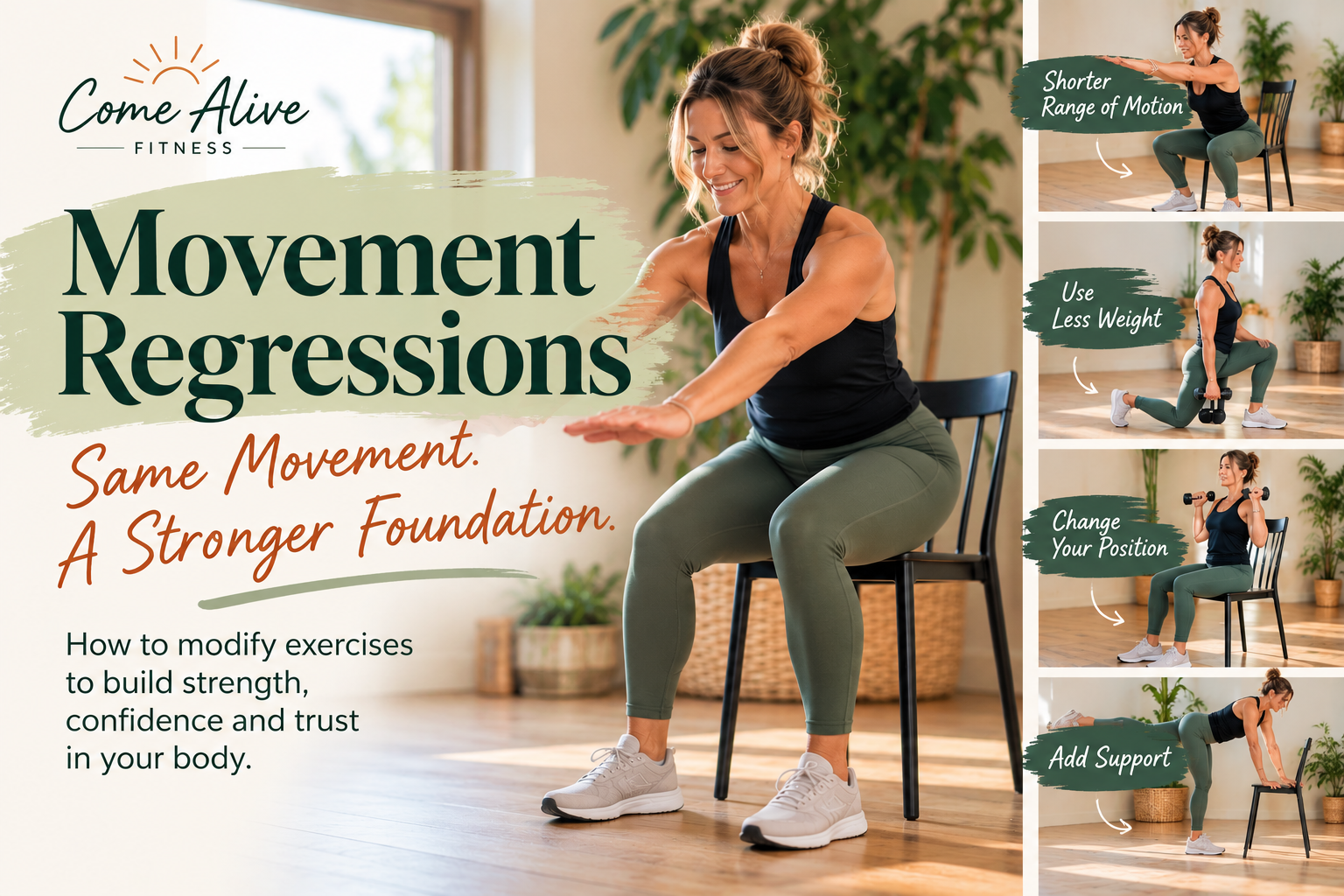
One of the things I talk about a lot in my classes is regressions. A regression is simply a scaled-down version of a movement. It reduces the physical demand, complexity, or stress on the body while still allowing you to practice the movement pattern.
And here's the important part:
A regression isn't going backward. It's how we build the foundation to move forward.
I was reminded of this recently with one of my regulars, Chikako, who is 82 years young. A few weeks ago, Chikako injured herself in the area of her lower back/upper glute. We aren't certain exactly what she did, but she was dealing with enough pain that she needed to take some time away from exercise to rest, recover, and rehabilitate. I felt terrible when I heard the news because earlier that week, we had done a more advanced stretch in class. Looking back, it's possible that I asked her body to move into a range of motion that it simply wasn't ready for.
That was a good reminder for me as a coach, too: Just because a body can be moved farther doesn't mean it should be.
This past week, Chikako was ready to come back to class. And we are taking it easy. Bending forward is still challenging for her, so instead of asking her body to reach all the way down to the floor, we bring the earth closer to her. A chair becomes her new starting point. We're using a more restricted range of motion. We're slowing things down. We're choosing movements that feel manageable and controlled rather than forcing her back into the movements she was doing before the injury.
These are movement regressions.
And they are exactly what she needs right now.
So what does a regression actually look like?
There are lots of ways to make an exercise more accessible without abandoning the movement altogether.
1. Reduce the range of motion
If a full-depth squat doesn't feel good or isn't yet accessible, use a chair or bench as a target. Instead of lowering all the way down, you might squat only as far as you can control comfortably.
The goal isn't to force yourself into a particular depth. The goal is to own the range you have. Over time, as strength, mobility and confidence improve, that range may naturally increase.
2. Slow it down
Speed adds complexity. Try breaking a movement into smaller pieces and moving deliberately through each one. Instead of rushing through a lunge, for example, take the step forward (or backward if your going for a reverse lunge). Once there and you feel balanced, then make sure your tailbone is turned down and supporting legs knee is under the hip. Once you hae balance there then lower down. Take a moment at the bottom then rise up to stand.
Slowing down gives you more information about what your body is actually doing.
3. Reduce the weight.
There is nothing magical about lifting the heaviest weight possible. Sometimes the best way to get stronger is to temporarily use a lighter weight that allows you to maintain good control and confidence. You can always add load later.
4. Change your body position.
Standing isn't always the best place to begin. You can perform many movements seated, kneeling, or lying down. A standing exercise might become a seated exercise while you're rebuilding strength, balance, or confidence.
5. Add support.
A chair, wall, railing, resistance band, or even a stable surface can give your body the assistance it needs while you practice the movement.
Support isn't cheating. Support is a tool.
Build trust before you demand more
This is the part I think we sometimes miss.
We tend to think about fitness as more:
More weight.
More reps.
More speed.
More range of motion.
More intensity.
But sometimes the smartest thing you can do is less.
Reducing the range of motion can give your body a successful experience. That success builds strength and, just as importantly, trust.
Then you can gradually ask for more.
A little more range.
A little more load.
A little more complexity.
A little more independence.
That's how we progress.
And this isn't just for an 82-year-old coming back from an injury. It's for all of us. If something doesn't feel right, you don't have to abandon the movement.
Ask yourself: How can I make this a little easier?
Can I reduce the range?
Slow it down?
Use less weight?
Change my position?
Add some support?
There is no prize for doing the hardest version of an exercise.
The goal is to find the version your body can do well today—and build from there.
And sometimes, that "easier" version is actually the smartest, strongest choice you can make.