Radishes
Radishes are a wonderful spring root veggie. The shoot up quickly and help the body with its crisp texture and spicy flavor to provide a valuable source of fiber and Vitamin C which supports digestion, immunity and skin health. Best part, no waste with this entirely edible little powerhouse! Radish greens or the leaf is highly fibrous and deliciously too! Add them to your dandelion greens to dilute the bitterness or add to your salad like baby spinach.
How to eat them?
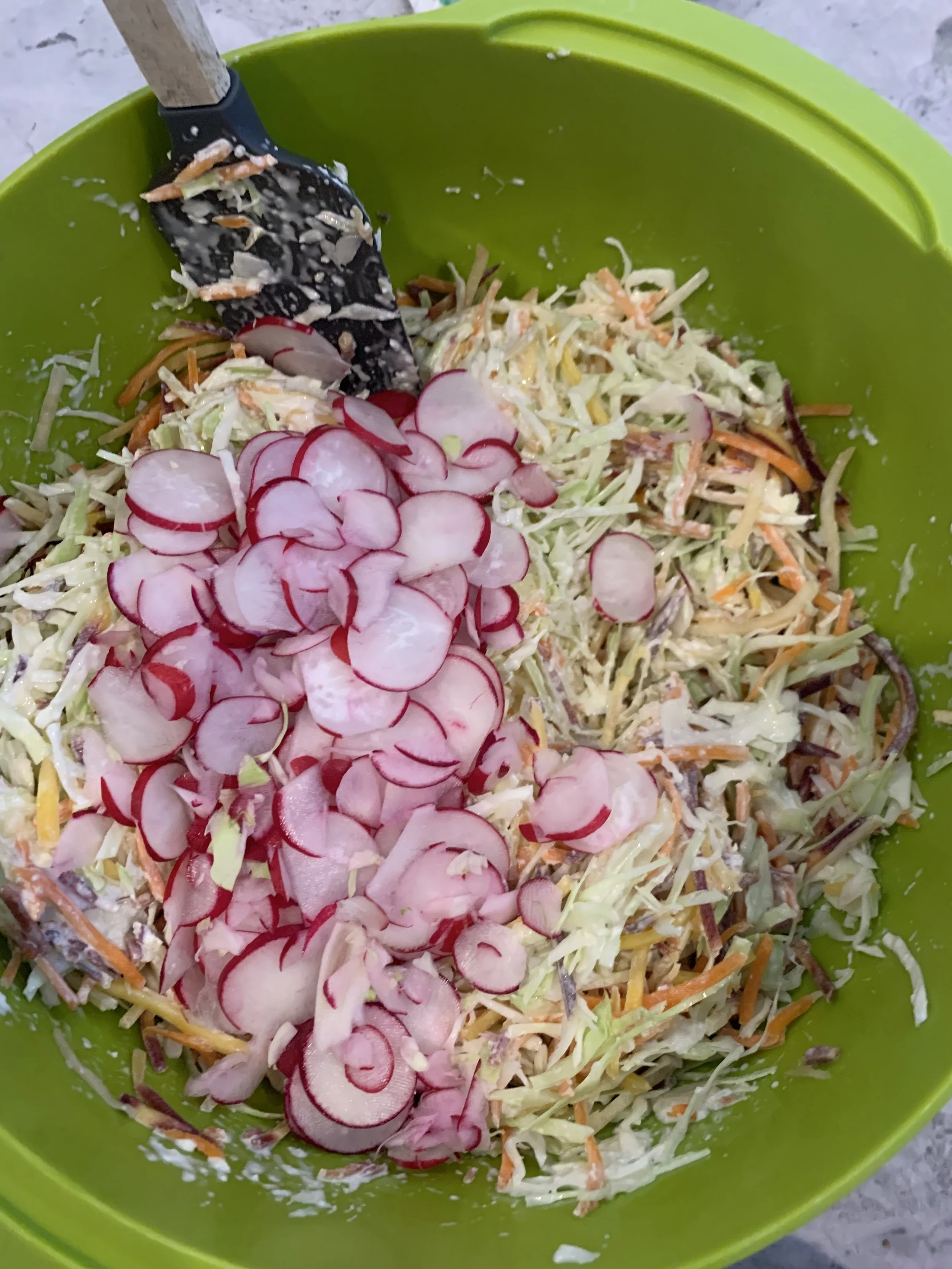
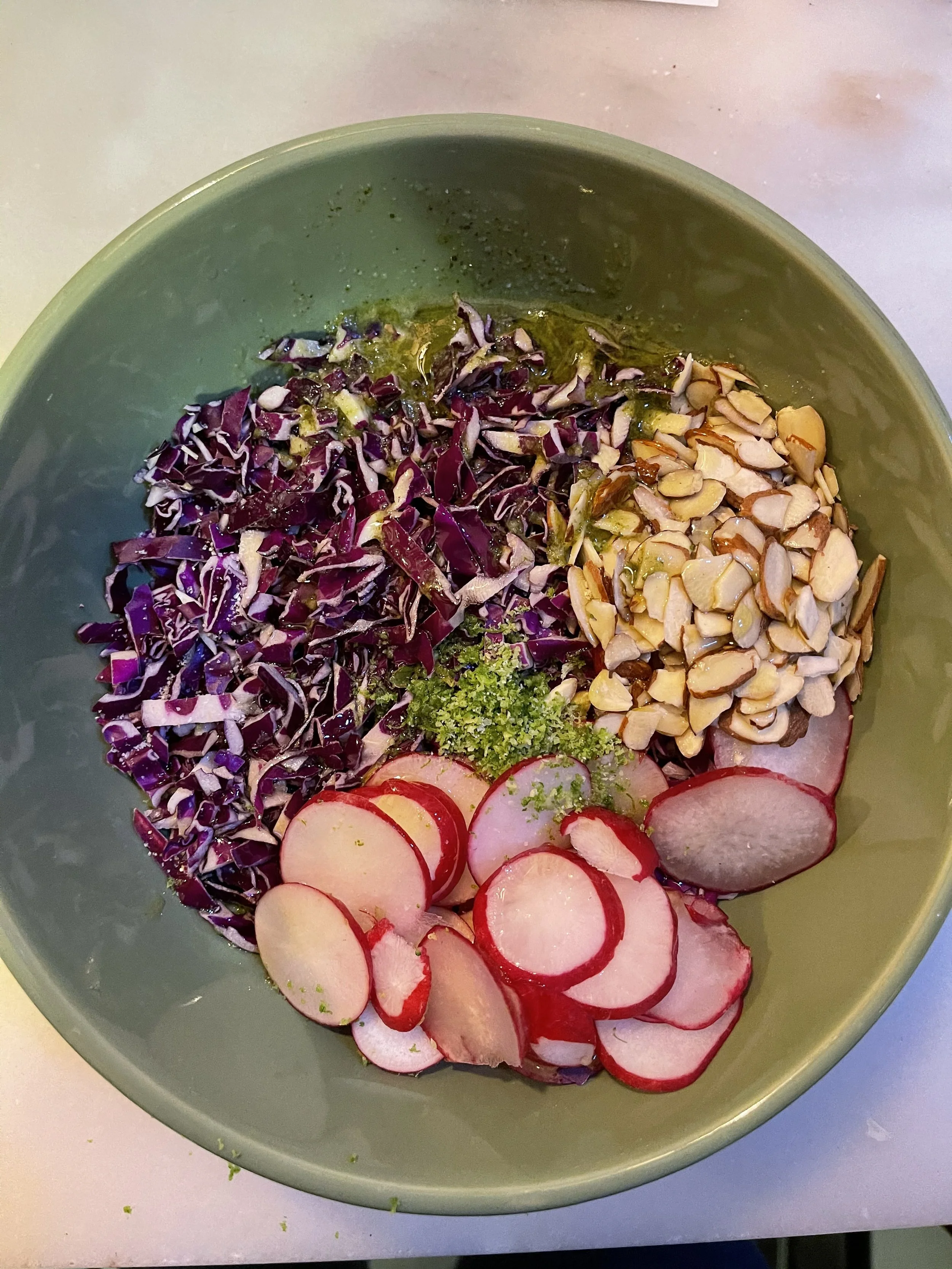
Raw: Slice into salads or use as a colorful crunchy garnish.
Cooked: Roast, sauté, or braise to bring out sweetness and mellow the spice.
Greens: Sauté, in pesto, or add to soups (best cooked to soften texture).
Pickled: A popular way to preserve and flavor them, especially in Asian cuisine (like kimchi).
My favorite way to prepare them: Roasting
2nd Favorite way: Pickling
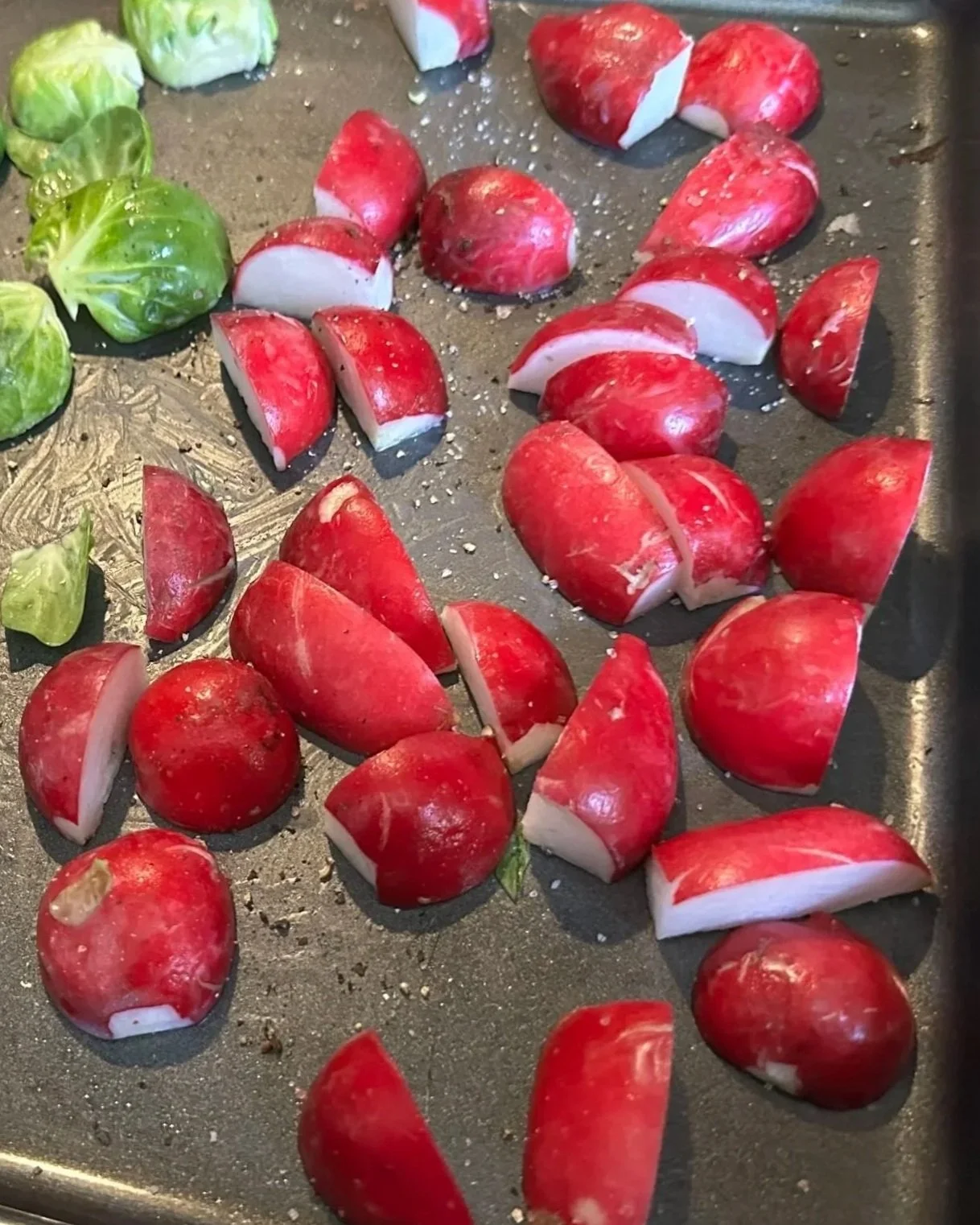
How to Roast them
Preheat oven 375.’
Scrub the radishes clean, dry. Trim the ends then slice in halves.
Place on baking pan cut side down. Roast for 20-25 mins.
Turn then over and roast for an additional 10-15 mins until soft.
Sprinkle with sea salt and enjoy!
How to serve them roasted:
As a veggie side dish with your dinner
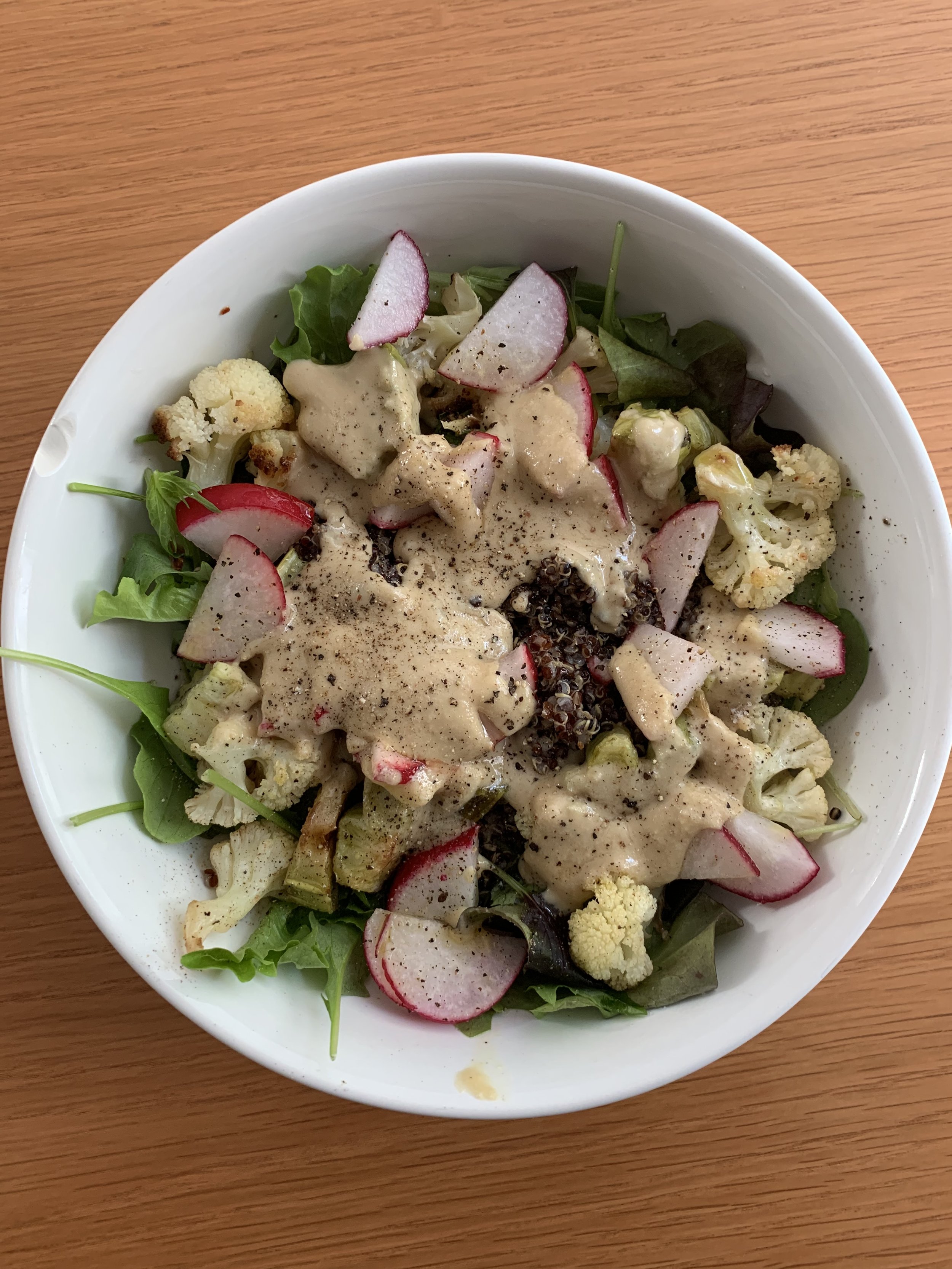
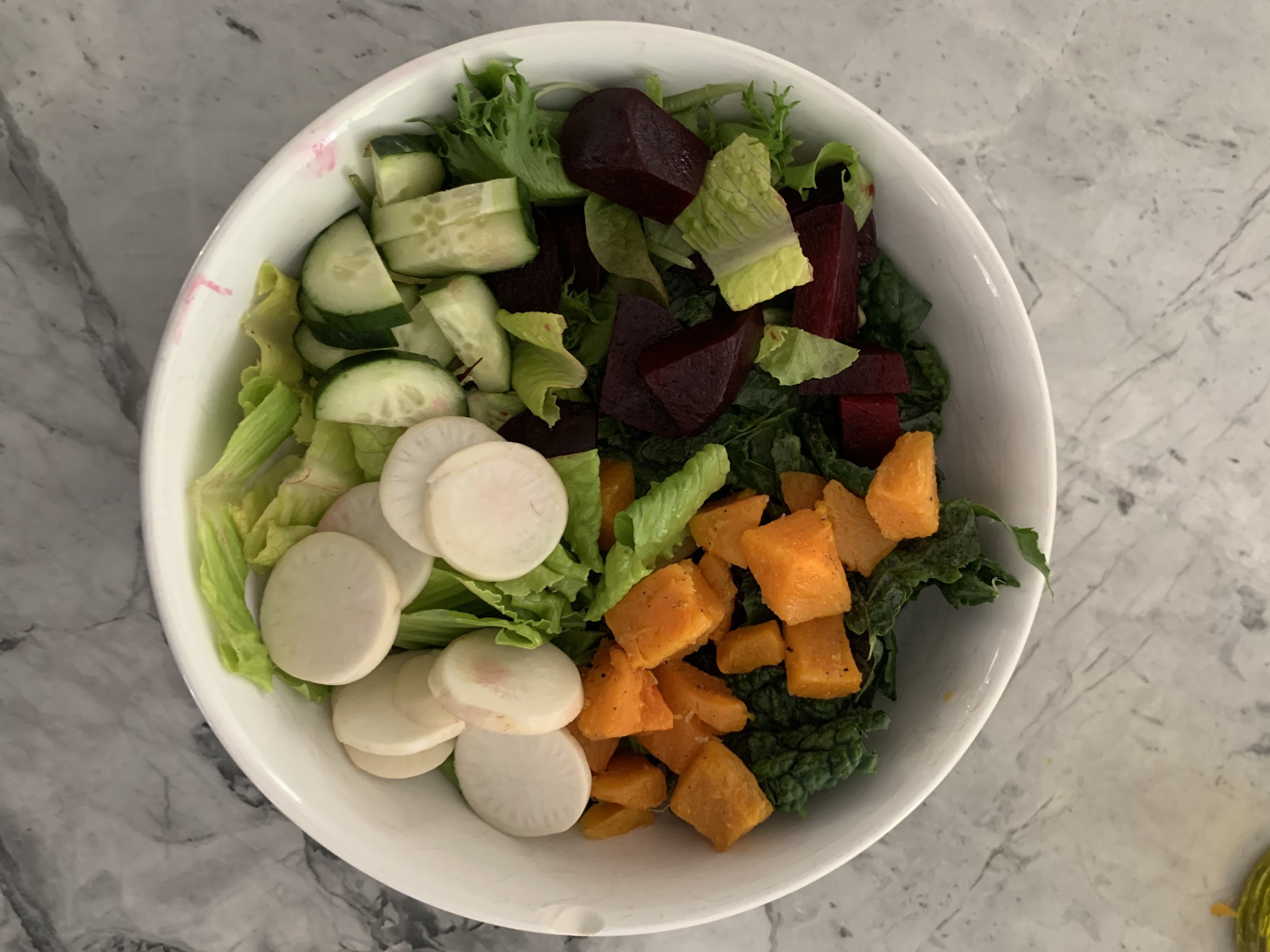
Added to a salad or quinoa bowl.
How to Pickle Them:
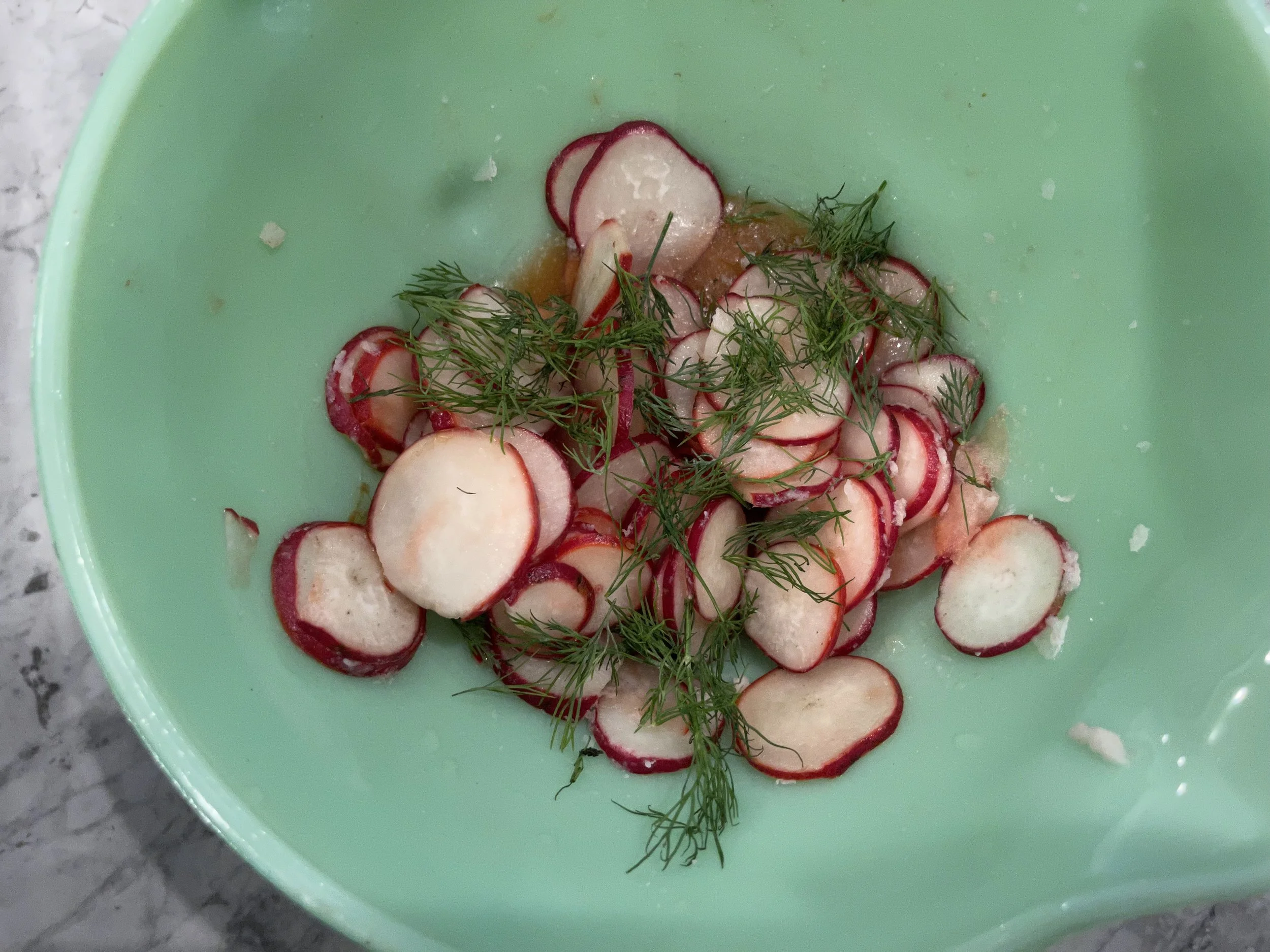
Slice up 1 bunch (about 20 radishes) and soak in a jar with warmed ½ cup white or ACV, ½ cup water, 1 tsp salt, and 1 TBSP sugar. If you’re feeling peppy add some dill, garlic, mustard seeds or peppercorns.
Here is a compilation of recipes and techniques I’ve used to incorporated radishes into my diet.



More Wonderful Radish Info:
Varieties
Spring Radishes: Small, quick-growing, often red with white flesh (e.g., Cherry Belle).
Winter Radishes: Larger, more pungent, and can be stored longer (e.g., Daikon, Black Spanish).
Colors: Available in red, white, black, purple, and green.
High in Vitamin C, with greens containing Vitamins A and K.
Good source of potassium, calcium, and magnesium.
High in fiber and water, which aids digestion. The fiber content slows sugar absorption which prevents blood sugar spikes mid-meal and lowers the starch-induced post-meal glycemic load.
Aids overall body hydration.
Contain anthocyanins (flavonoids and antioxidants), that support the immune system and repair oxidative damage caused in the body by free radicals,
Radishes contain glucosinolate, which can decrease cholesterol levels in the liver and prevent the formation of gallstones.
Reduces Risk of Chronic Disease due the dietary fiber component. This prevents and manages heart disease, high cholesterol, diabetes, and digestive diseases. It may also prevent infection and improve mood and memory.